Strava MCP vs IcuSync: What Claude Can Do
By Toby Pattullo
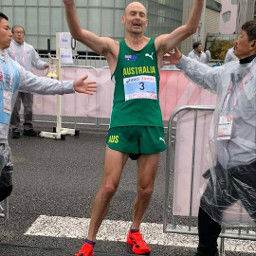
Australian Deaflympic marathon and ultra runner, and the solo developer behind IcuSync.
A real-world comparison using two 10×400m sessions
Strava recently launched its own MCP connector, currently in beta, giving Claude access to your Strava data directly in conversation. If you're already an IcuSync subscriber, you might be wondering whether Strava MCP replaces it, complements it, or is just a free shortcut to the same thing.
The short answer: they're not the same thing at all. One is a read-only window into your activity history. The other closes the loop between planning and execution. But the longer answer is more interesting, so let's walk through it with real data.
What was tested
Two sessions: a 10×400m interval session run on June 2 and again on June 9, 2026. Same route, same structure, same athlete. The goal was to push every available tool in both connectors and see what each one could actually tell us.
The tools, side by side
| Tool | Strava MCP | IcuSync |
|---|---|---|
| List recent activities | Yes | Yes (via training history) |
| Activity summary (distance, pace, HR, cadence) | Yes | Yes |
| Lap / interval breakdown | Yes: laps, segments, best efforts per activity | Yes: per-interval power, pace, HR, aerobic decoupling, zone distribution + extended Stryd/biomechanics metrics |
| Raw time-series streams (power, HR, pace, altitude) | Yes | No (by design, see below) |
| Segment efforts (Strava segments) | Yes | No |
| Best efforts (per activity) | Yes: fastest 400m, 1km, mile, 5km etc. within a single activity | No. Use get_best_efforts for all-time or period bests across all activities |
| Best efforts (all-time / across all activities) | No | Yes |
| Athlete zones (HR, pace, power) | Yes (estimated from age/performance) | Yes (from actual testing) |
| Athlete profile (name, weight, location) | Yes | Yes |
| Gear (shoes, bikes) | Yes: dedicated list with total distance, weight, brand, model | Partial: gear name shown per activity, no dedicated gear list |
| Fitness / fatigue / form (CTL, ATL, TSB) | No | Yes |
| Wellness data (HRV, sleep, resting HR, soreness) | No | Yes |
| Power curve (90 days, season, all-time) | No | Yes |
| Training summary (zone distribution, weekly TSS) | No | Yes |
| Estimated VO2max | No | Yes (90-day power curve) |
| Push structured workouts to calendar | No | Yes |
| Edit workouts on calendar | No | Yes |
| Delete workouts | No | Yes |
| Log wellness data | No | Yes |
| Availability | Strava Premium subscribers only | IcuSync subscription |
What Strava MCP does well
Strava MCP gave Claude access to five tools: list activities, get activity performance, get activity streams, get athlete zones, and get athlete profile. The connector is currently in beta, which showed during testing get_activity_performance returned an error on one of the two sessions and required a retry before succeeding. Worth keeping in mind if you hit unexpected failures.
The streams tool is the standout. For the June 9 session it returned 100-point resolution time-series data for power, heart rate, pace, cadence, altitude, and grade, enough to plot the full session and see exactly where each interval landed. The lap data from get_activity_performance provided rep-by-rep power, HR, time, and grade for all 10 reps across both sessions, making a direct week-on-week comparison possible.
That comparison told a clear story. On June 2, average HR through the rep set was running 10-15 bpm higher despite nearly identical power output. Max HR hit 179. On June 9 it peaked at 168. Same route, same paces, meaningfully lower physiological cost. A genuine signal of fitness adaptation that the data made visible.
IcuSync intentionally does not expose raw time-series streams. A single activity stream can return thousands of data points covering every second of a session. That volume burns through a significant amount of Claude's token budget, leaving less room for the analysis, planning, and coaching conversation that actually matters. IcuSync instead surfaces the data athletes need most: per-interval aggregates, aerobic decoupling, zone distribution, and the full coaching context across weeks of training. The streams tool is genuinely useful for specific visualisation tasks, but it is a tool you reach for deliberately rather than something running in the background of every session.
Strava MCP is good at answering the question: what happened in this session?
What IcuSync adds
Where Strava MCP stops at individual activity analysis, IcuSync operates across your entire training context and goes deeper on individual sessions too.
Interval breakdown with aerobic decoupling. IcuSync's get_activity_detail returns per-interval pace, power, HR, and distance, plus aerobic decoupling (Pw:HR drift) and efficiency factor for the whole session. For Stryd users, get_extended_metrics adds a second layer: ground contact time, vertical oscillation, leg spring stiffness, form power, impact loading rate, and W' balance per interval. Strava's lap data covers the basics; IcuSync's interval detail covers the biomechanics underneath them.
Best efforts across all activities. IcuSync's get_best_efforts pulls your fastest times and best power outputs across every activity in Intervals.icu, not just the one you're looking at. Current 12-month bests: 400m in 1:16, 5km in 19:37, marathon in 2:58:15. Strava can tell you your best effort within a single activity; IcuSync tells you where you stand across your whole training history.
Fitness, fatigue, and form. IcuSync has a get_fitness tool that returns CTL (chronic training load / fitness), ATL (acute training load / fatigue), and TSB (training stress balance / form) across any date range. On June 9, CTL was 65.3 and fitness has been building steadily since early May. TSB was -5, meaning slightly fatigued but well within a productive training range. Strava has no equivalent to this.
Training zone distribution. Over the past nine days of running, IcuSync showed 42% of time in Z2 power, 31% in Z3, and 7% in Z4, confirming the training structure is holding its polarised shape even through a speed phase. Strava cannot aggregate zone distribution across a block.
Power curve. The 90-day run power curve shows a critical power of 330W, 5-minute best of 361W, and estimated VO2max of 60.5. These are the benchmarks that tell you whether training is working at a physiological level. Strava has no power curve for running.
Wellness data. IcuSync surfaces HRV, resting HR, sleep, and subjective scores (fatigue, soreness, mood, motivation) from Intervals.icu. Understanding why Tuesday felt harder than last Tuesday requires more than activity data. It requires knowing what happened the night before.
The write direction. This is the one that matters most for the core use case. IcuSync can push structured workouts directly to your Intervals.icu calendar, which then syncs to your Garmin, Coros, Wahoo, or Suunto. Claude can build a session, review it with you in conversation, and send it to your device, all without leaving the chat. Strava MCP cannot write anything. It is entirely read-only.
Accurate zones matter more than you'd think
One detail worth calling out: Strava's zone tool derives HR zones from your age and run zones from a predicted race performance. The athlete profile came back with an estimated 5km of 19:39 and HR zones built on max HR from age.
IcuSync zones are set from actual testing. The run LTHR is 172 bpm, max HR is 190 bpm, and threshold pace is 4:02/km, all from real data. When Claude is building a workout or analysing whether a session was in the right zone, the source of those zones makes a significant difference to the answer.
What each connector actually costs
Strava MCP requires a Strava Premium subscription. IcuSync requires both an Intervals.icu account (free) and an IcuSync subscription. If you're already paying for Strava Premium, the Strava connector costs you nothing extra to try.
But the analysis above shows that Strava MCP and IcuSync answer fundamentally different questions. Strava MCP is a read-only lens on completed activities, useful for post-session analysis, comparing two sessions, or digging into raw streams. IcuSync is the coaching layer: fitness tracking, training planning, wellness monitoring, and the ability to push structured sessions to your device.
Getting both connectors working together
There is one catch worth knowing about before you connect both tools.
Many Intervals.icu users sync their activities via Strava. This works fine inside the Intervals.icu web app, which has direct database access. But the Intervals.icu API that IcuSync uses is a different story. Strava's terms of service block third-party apps from accessing activities that arrived through Strava's own sync. The result: Claude can see your activities in Strava MCP but IcuSync cannot see the same activities at all.
The fix is straightforward and does not cost you your existing Strava history. Go to Intervals.icu Settings, open Connections, and uncheck "Download activities" under Strava. Then connect your device directly to Intervals.icu. Garmin, Wahoo, Coros, Suunto, and Polar all support native sync. From that point forward, new activities sync natively and are fully accessible to both IcuSync and Claude. Your existing Strava activity history stays intact in Strava, and Strava MCP can still read it.
If you use TrainerRoad, enable Dropbox sync in TrainerRoad settings and connect Dropbox in Intervals.icu under Settings.
Once you have native device sync set up, both connectors work together without any conflict. Strava MCP handles the read-only Strava-side view: raw streams, segment efforts, social data. IcuSync handles the coaching layer: fitness tracking, planning, wellness, and pushing workouts to your device. Neither gets in the way of the other.
The verdict
If you're a Strava Premium user who wants to ask Claude about a specific session: what happened in that workout, how did your HR compare, show me the power over time. Strava MCP is a capable tool and worth connecting.
If you want Claude to function as a training partner who knows your fitness trajectory, can build next week's plan, understands your zones from actual testing, and can push a structured workout directly to your Garmin, that's IcuSync's territory.
The most complete picture comes from both. Strava MCP provides raw time-series streams and Strava segment efforts that IcuSync doesn't surface. IcuSync provides deeper interval analysis, aerobic decoupling, Stryd biomechanics, fitness trends, power curves, zone distribution, wellness data, and the write direction, none of which Strava can match.
Used together, they give Claude a genuinely complete view of your training: what happened today, how it fits into the last 90 days, and what to do next.